How EVA Teak Decking Sheet Is Made for Lightweight, Anti-Slip Performance
What Is an EVA Teak Decking Sheet, and Why the Manufacturing Process Matters
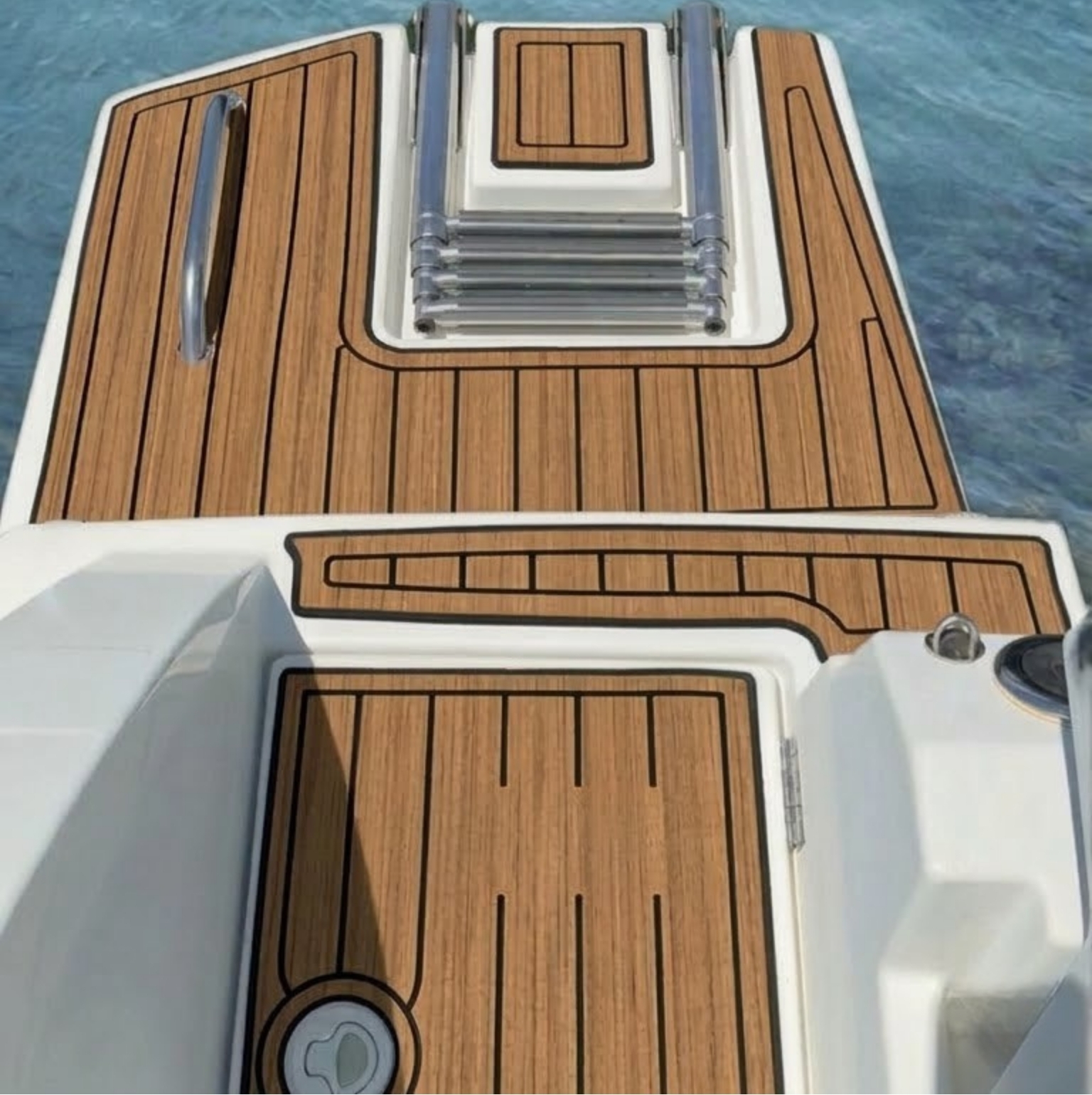
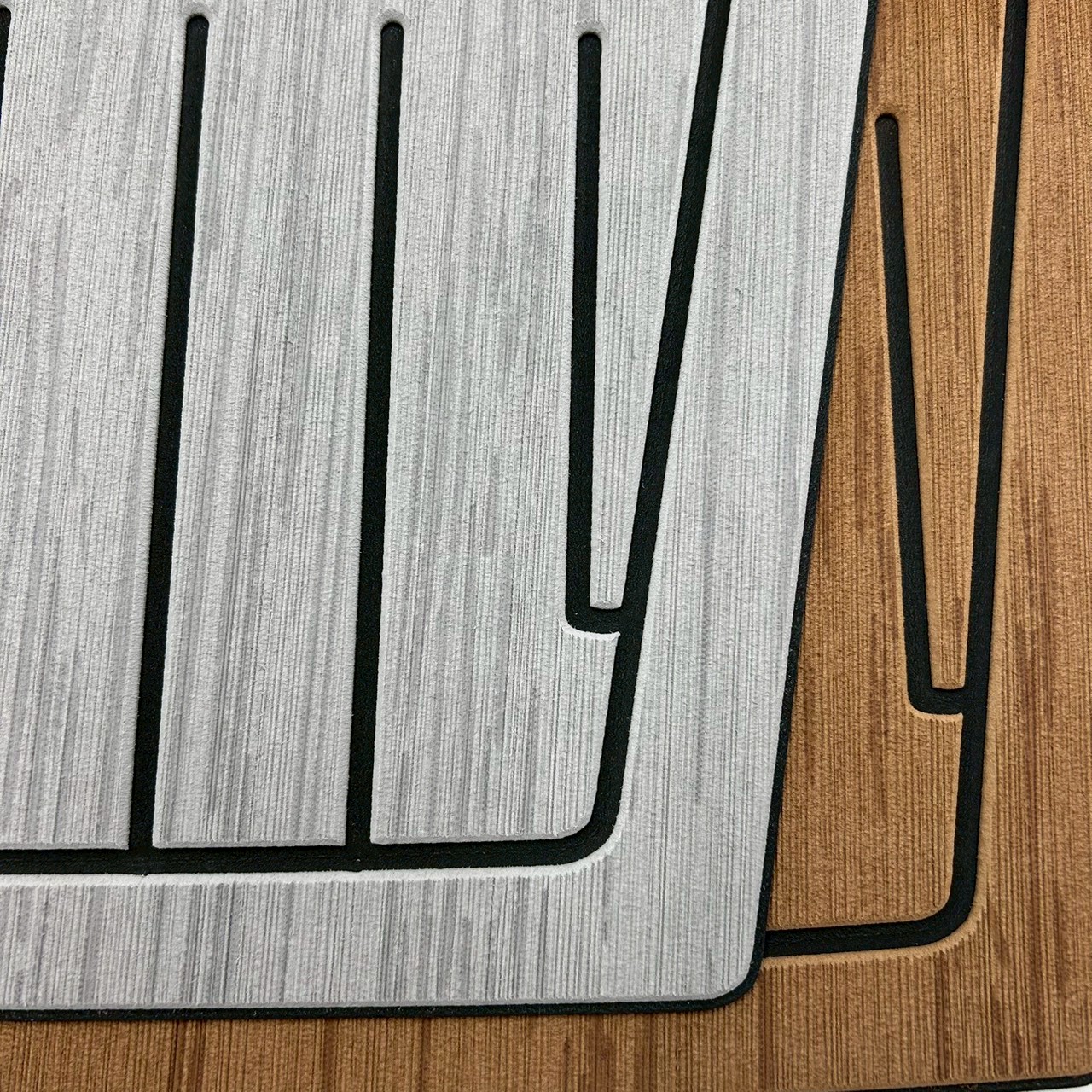
An EVA teak decking sheet is a closed-cell foam decking material engineered to replicate the look of natural teak while solving the weight, maintenance, and slip-resistance problems that come with real wood on a boat deck. The base material, cross-linked EVA (ethylene-vinyl acetate) foam, is common across many types of marine flooring, but what actually separates a true eva teak decking sheet from a plain eva decking sheet is not the foam itself. It is the wood-grain surface, which is created through laser engraving rather than printing or molding, a step covered in detail later in this guide.
Producing a decking sheet that is lightweight, grips well underfoot, and holds a realistic grain pattern requires two distinct manufacturing stages: Foam Expansion, where the raw foam material is built, and Foam Converting, where that raw sheet is shaped, textured, laminated, and engraved into a finished product. The rest of this guide walks through both stages in the order they actually happen on the production floor.
Stage One: Foam Expansion, Building the Core Material
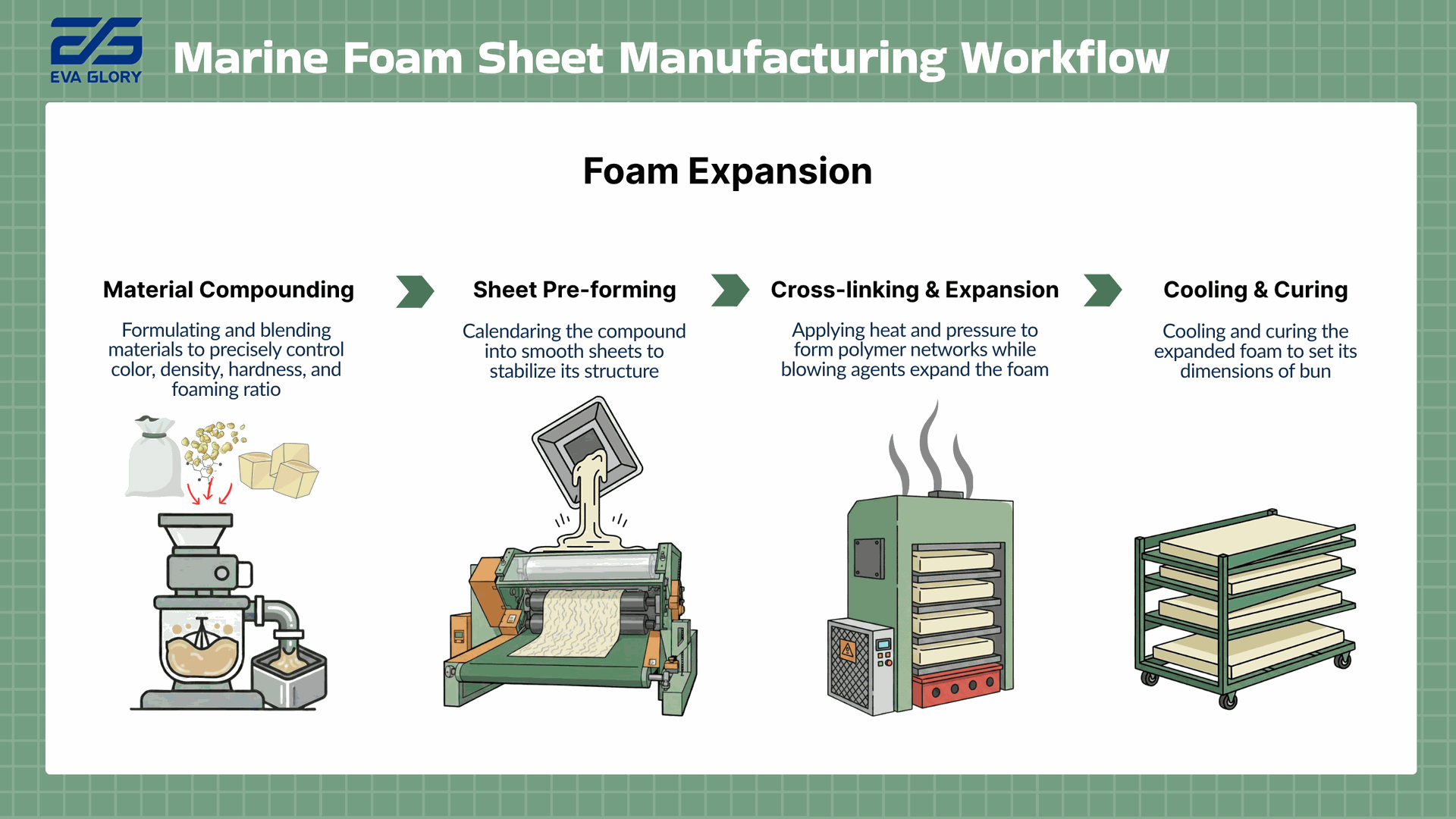
Foam Expansion is where the physical properties of the eva teak decking sheet, its weight, density, and structural stability, are locked in before any surface work begins. Four steps make up this stage.
Material Compounding
The process starts with formulating and blending raw materials, whether pure EVA or a PE/EVA foam decking sheet blend, to precisely control color, density, hardness, and foaming ratio. This is where the lightweight character of a lightweight eva teak decking sheet is actually determined. Marine-grade compounds are typically formulated in the 150 to 200 kg per cubic meter density range, roughly a third of the weight of solid teak, and getting that density right at the compounding stage is what allows every later step to produce a sheet that stays light without sacrificing durability.
UV-resistant additives are also built into the compound at this stage, not applied as a surface coating afterward. Because the finished decking sheet sits in direct, prolonged sun exposure on an open deck, formulating UV stability directly into the raw material is what allows the sheet to resist discoloration, chalking, and premature brittleness over years of outdoor use, rather than relying on a coating that can wear off over time.
Learn how density and hardness affect marine EVA foam performanceSheet Pre-forming
The compounded material is then calendared into smooth, uniform sheets to stabilize its structure before expansion. This step matters more than it looks: an unevenly pre-formed sheet will expand unevenly in the next step, leading to thickness variation across the finished decking sheet.
Cross-linking and Expansion
Heat and pressure are applied to form the polymer networks while blowing agents expand the foam. This is the step that produces the closed-cell structure marine EVA foam is known for, the same structure that gives the sheet its water resistance, its cushioning underfoot, and its resistance to compression set over years of use on a deck.
Cooling and Curing
Finally, the expanded foam is cooled and cured to set its dimensions as a finished bun. Consistent cooling is what keeps thickness and density uniform from batch to batch, which matters directly to any converter or boat builder ordering an eva foam teak decking sheet for boat use at volume, since batch-to-batch inconsistency is one of the most common quality complaints in bulk foam sourcing.
Stage Two: Foam Converting, Shaping the Finished Decking Sheet
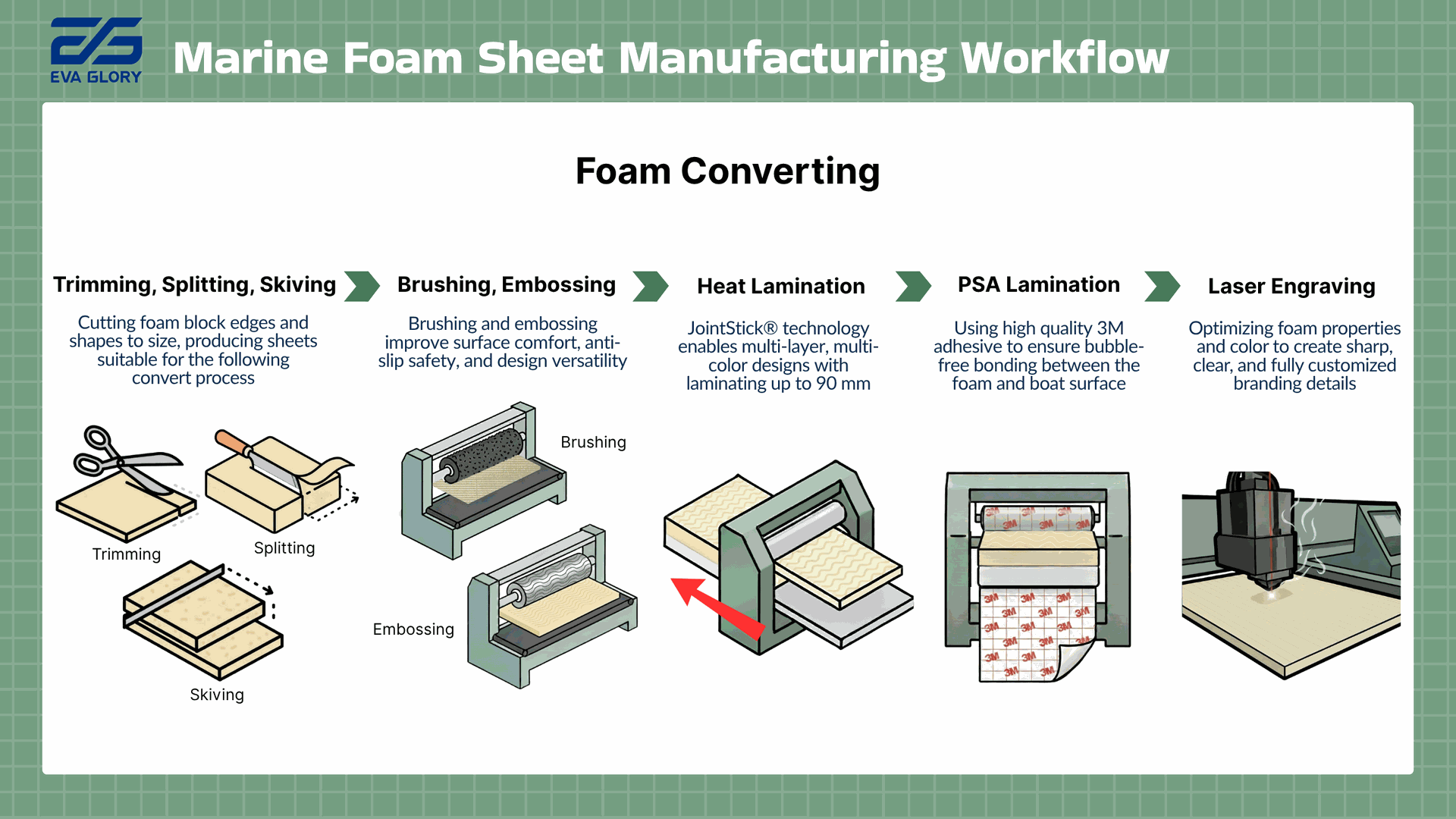
Once the raw foam bun exists, Foam Converting is where it becomes an actual eva faux teak decking product: cut to size, textured for grip, bonded into multiple layers, adhered for installation, and engraved with a realistic wood grain.
Trimming, Splitting, and Skiving
The foam block is cut at the edges and split or skived into sheets of the correct size and thickness, producing the flat stock that the rest of the converting process works from.
Brushing and Embossing: Engineering the Anti-Slip Surface
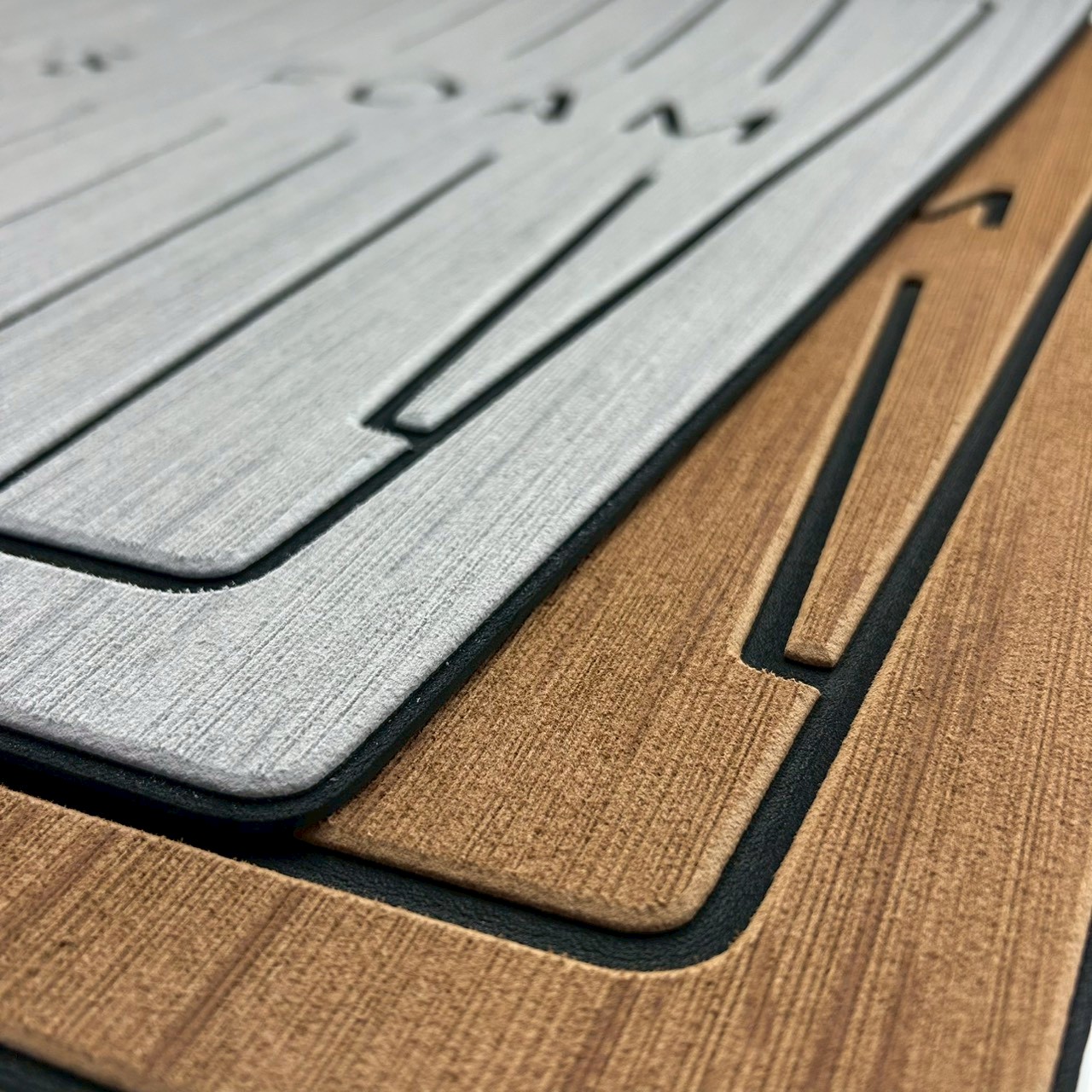
Brushing and embossing are what create an anti-slip eva teak decking sheet, not the laser engraving alone. Brushing physically roughens the surface at a controlled depth, and embossing presses a texture pattern into the foam. The depth of this brushing step is directly connected to how the later laser-engraved grain reads visually: too shallow, and the engraved grain sits flat on the surface with little tactile texture; too deep, and the grain lines can lose definition. Getting this depth right is part of what makes the surface both grip well underfoot in wet conditions and look convincingly like real wood.
Heat Lamination: Multi-Layer Bonding Strength
Multiple foam layers, often in different colors, are bonded together under heat to build multi-layer constructions of up to roughly 90 mm. What matters most to a buyer here is not the lamination method itself but the result: a bond strong enough that the layers will not delaminate under years of foot traffic, sun exposure, and temperature swings on an open deck. A weak bond between layers is one of the most common failure points in lower-quality decking sheets, so this step is where long-term durability is effectively decided.
PSA Lamination: Bubble-Free Installation
A pressure-sensitive adhesive, commonly a high-quality 3M-grade adhesive, is laminated onto the back of the sheet to ensure bubble-free bonding between the foam and the boat surface. This is the step that directly enables the fast, peel-and-stick installation that boat builders and converters expect from a modern eva teak decking sheet, compared to the labor-intensive fitting required for solid teak planking.
Laser Engraving and CNC Routing: Replicating Realistic Wood Grain
This is where the sheet's identity as teak decking is actually created. A laser head engraves the grain pattern into the surface, and it is the precise combination of laser power, engraving speed, and depth settings, tuned against the brushing depth from the earlier step, that determines whether the finished sheet looks like an authentic plank or an obviously synthetic mat. CNC routing then optimizes the sheet's final shape and color detailing, cutting sharp, clean edges for branding, custom logos, or complex deck geometries with repeatable accuracy across every sheet in a production run.
Why Process Control Determines Final EVA Faux Teak Decking Quality
Every stage in this process maps directly to a property a buyer actually evaluates when comparing suppliers. The table below summarizes that relationship.
| Process Step | Primary Buyer-Facing Result |
|---|---|
| Material Compounding | Lightweight, controlled density, UV-resistant raw material |
| Cross-linking & Expansion | Water resistance, cushioning, compression set resistance |
| Brushing & Embossing | Anti-slip grip underfoot |
| Heat Lamination | Multi-layer bond strength and durability |
| PSA Lamination | Fast, bubble-free installation |
| Laser Engraving & CNC Routing | Realistic wood grain, custom branding precision |
Table: How each manufacturing step shapes the final performance of an EVA teak decking sheet.
See our full range of EVA teak decking sheet productsNo single step can compensate for a weak one elsewhere in the chain. A sheet with excellent grain replication but a poorly controlled brushing depth will still feel less authentic underfoot, and a sheet with a strong laminate bond but inconsistent density from the compounding stage will vary in weight and feel from batch to batch. This is why evaluating a decking sheet supplier by process capability, not just finished-product photos, is the more reliable way to judge quality.
Sourcing an EVA Teak Decking Sheet from a Full-Process Manufacturer
For boat builders sourcing finished decking and converters purchasing raw sheet stock to fabricate further, working with a custom eva teak decking manufacturer that controls the full process, from compounding through laser engraving, removes a layer of quality risk that comes from relying on multiple subcontracted steps. It also opens the door to genuine customization: color batching at the compounding stage, thickness and hardness adjustments, and grain patterns engraved to match a specific brand or boat model.
An eva teak decking sheet is ultimately the sum of eight coordinated manufacturing decisions, not one material choice. Understanding how each step contributes to weight, grip, and appearance gives buyers a much more useful framework for evaluating suppliers than comparing spec sheets alone.
Frequently Asked Questions
What makes an EVA teak decking sheet look like real wood grain?
The wood-grain texture is created through laser engraving, not printing. The realism depends on how the laser's power, speed, and depth settings are tuned against the brushing depth applied earlier in the process. If brushing is too shallow, the engraved grain looks flat; if it's too deep, the grain lines lose definition. Getting this combination right is what makes the surface both grip well underfoot and look convincingly like real teak.
Why is an EVA teak decking sheet lighter than natural teak?
The weight is controlled at the material compounding stage, where marine-grade EVA is formulated to a density of roughly 150 to 200 kg per cubic meter, about a third the weight of solid teak. This lower density is built into the raw material before any shaping or converting takes place.
Why does it matter if one manufacturer controls both Foam Expansion and Foam Converting?
When raw foam production and converting are split across different vendors, small deviations in density, hardness, or color can go uncaught until the sheets reach final assembly. A manufacturer that controls both stages under one roof maintains tighter consistency from batch to batch, which matters most for boat builders and converters placing volume orders that need to match exactly across every shipment.
How is the anti-slip surface of an EVA teak decking sheet created?
Anti-slip performance comes from the brushing and embossing step during Foam Converting. Brushing roughens the surface at a controlled depth while embossing presses in a texture pattern, together creating grip that holds up in both wet and dry conditions.
Can EVA teak decking sheets withstand long-term outdoor sun exposure?
Yes. UV-resistant additives are built directly into the foam compound at the material compounding stage, rather than applied as a surface coating. This allows the sheet to resist discoloration, chalking, and brittleness over years of outdoor and marine exposure.