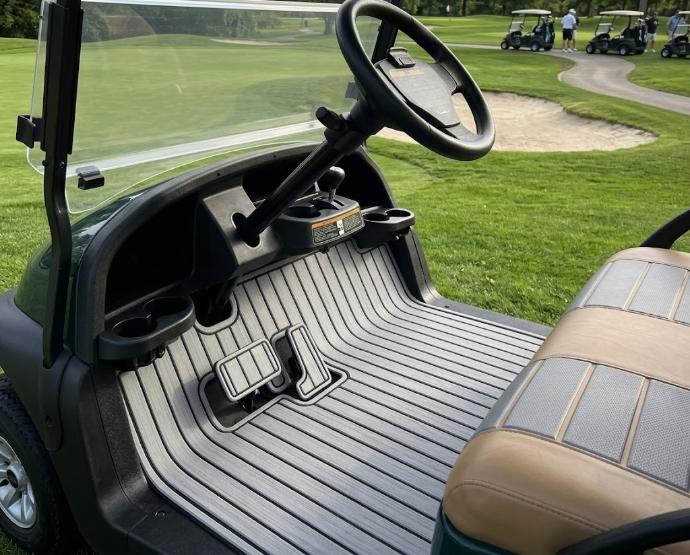
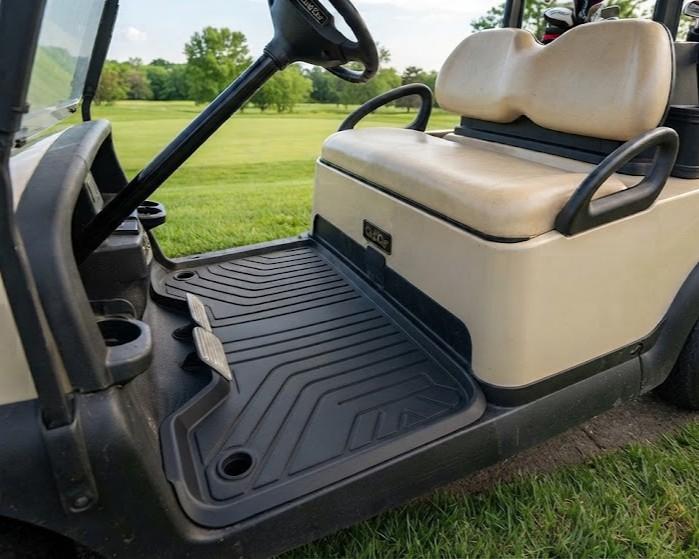
What Is Closed-Cell EVA Foam?
Closed-cell EVA (ethylene-vinyl acetate) foam is a polymer material manufactured through a compression or injection molding process that fuses tiny gas cells into a dense, non-porous structure. Because the cells are sealed rather than interconnected, the material does not absorb water, making it inherently resistant to moisture, mildew, and swelling. EVA foam is also prized in manufacturing for its ability to be precisely formulated for different densities, giving product developers control over firmness, cushioning, and rebound characteristics depending on the intended application.
What Is Rubber (Natural vs. Synthetic)?
Rubber flooring materials used in vehicle mats generally fall into two categories: natural rubber, derived from latex and valued for elasticity, and synthetic rubber (such as SBR or nitrile blends), engineered for specific resistance properties like oil or chemical exposure. Rubber has a long history in automotive and utility vehicle flooring because of its tensile strength and resistance to punctures. However, its density and production process typically make it heavier and less flexible to customize than closed-cell foam alternatives.
How Foam Density Affects Comfort and Durability in Custom Mats
When evaluating materials for golf cart floor mats, three performance categories tend to matter most to B2B buyers: durability, water resistance, and weight. The table below summarizes how each material typically performs.
| Performance Factor |
Closed-Cell EVA Foam |
Rubber (Synthetic/Natural) |
| Water Absorption |
Very low, closed-cell structure repels moisture |
Low to moderate, depending on compound |
| Weight |
Lightweight, reduces shipping and handling cost |
Heavier, adds to freight and handling costs |
| Abrasion Resistance |
Good, varies by foam density |
Excellent, especially for heavy foot traffic |
| Customization (color, logo, texture) |
High flexibility for embossing and multi-color molding |
More limited, higher tooling cost for custom textures |
| Cost Efficiency at Scale |
Generally lower material and tooling cost |
Higher raw material and processing cost |
| Odor & Off-Gassing |
Minimal with quality-controlled formulations |
Can retain a rubber odor, especially with natural rubber |
Comparison based on standard closed-cell EVA foam and mid-grade synthetic rubber compounds commonly used in vehicle flooring applications.
Durability and Abrasion Resistance
Rubber has traditionally held an advantage in raw abrasion resistance, which is why it remains common in heavy-duty commercial fleet applications, such as golf courses with high daily cart turnover. That said, higher-density closed-cell EVA foam formulations have closed much of this performance gap, offering comparable wear resistance for standard commercial and consumer-grade golf carts while remaining significantly lighter.
Water Absorption and Weather Resistance
For outdoor and marine-adjacent applications, a category golf carts often fall into given their exposure to rain, dew, and washdown cleaning, closed-cell EVA foam has a clear structural advantage. Because the cell structure does not allow water to penetrate, the material resists mold, mildew, and the gradual weight gain that can occur when porous materials absorb moisture over repeated exposure. Rubber compounds can perform well here too, but often require additional treatment or coating to match the same level of water resistance.
Weight and Installation Considerations
Weight is an often-overlooked factor in B2B sourcing decisions, but it has a direct impact on shipping costs and installation labor at the dealership or fleet level. EVA foam mats are typically 20-40% lighter than comparable rubber mats, which reduces freight expenses for brands shipping in bulk and lowers per-unit logistics costs across large-volume orders.
Cost and Manufacturing Efficiency
Material performance is only part of the sourcing equation. Manufacturing efficiency also directly affects unit cost, lead time, and how easily a brand can bring a customized product to market.
EVA foam manufacturing, particularly through compression molding, generally allows for faster tooling development and shorter lead times compared to rubber vulcanization processes. This is especially relevant for brands running smaller batch sizes or seasonal product launches, where long tooling timelines can delay time-to-market.
Customization Flexibility (Color, Texture, Logo Embossing)
For brands looking to differentiate their product line, EVA foam offers considerably more flexibility. Multi-color layering, debossed or embossed branding, and textured non-slip surfaces can be integrated directly into the molding process. Rubber can achieve similar effects, but typically at a higher tooling cost and with more limited color options due to the nature of the compounding process.
More design options: color, texture, and embossing for golf cart mats
Sustainability Considerations in Foam Manufacturing
Sustainability has become a growing consideration for B2B buyers, particularly those supplying to environmentally conscious markets. Foam manufacturers increasingly offer recycled-content foam options and pursue third-party certifications, such as the Global Recycled Standard (GRS) or Recycled Claim Standard (RCS), to verify recycled material content in finished products. Rubber, particularly synthetic rubber, has historically lagged in recycled-content availability, though recycled rubber crumb options do exist for certain applications. Buyers prioritizing sustainability credentials in their supply chain may find foam manufacturers better positioned to offer verifiable, certified recycled-content materials.
Which Material Should You Choose for Your Application?
There is no universal "better" material. The right choice depends on the specific use case. For golf course fleets with heavy daily traffic and minimal customization needs, rubber's abrasion resistance may still be the priority. For OEM brands, dealerships, and aftermarket suppliers looking for lightweight, weather-resistant, and highly customizable mats, especially at scale, closed-cell EVA foam typically offers the stronger overall value proposition, particularly when working with a manufacturer capable of precise density control and custom mold tooling.
See our golf cart mat manufacturing process
Looking for a manufacturing partner for your golf cart floor mat line? Let's talk material specs, MOQs, and lead times.
Contact Our Team